
If you play basketball seriously, you already know the toll it takes on your body. The constant sprinting, jumping, and cutting creates tight muscles that limit your speed and power on the court.
Yoga for basketball players is one of the most overlooked training tools in the sport.
It builds the core stability, flexibility, and leg power your game demands. It also protects the joints and muscles that absorb the most stress during competition.
This article covers seven essential yoga poses that strengthen and mobilize the exact areas basketball puts under pressure. You will also find a simple 15-minute routine you can plug into any training day. Whether you need a warmup or a focused recovery session.
Key Takeaways
- Yoga builds core strength, improves flexibility, and prevents injuries by enhancing the stability and leg power basketball demands.
- Seven essential poses, including High Plank, Warrior II, High Lunge, Bridge, Pigeon, Triangle, and Dancer, target the specific muscle groups basketball players rely on most.
- Regular yoga practice improves balance, coordination, and mental sharpness while reducing post-game soreness and injury risk throughout the season.
- Basketball players can complete a full yoga routine in 15 minutes, making it easy to fit into any training schedule.
- Tight muscles limit speed, agility, and shooting form. Consistent yoga practice opens your range of motion and protects against common basketball injuries like ankle and knee strains.
Video – Yoga For Basketball Players
Why is yoga important for basketball players?
Basketball demands explosive power and quick footwork, and it pushes your muscles, joints, and stabilizers to their limits. Tight muscles and limited mobility create real barriers. They slow you down, reduce your agility, and leave your body vulnerable to injury.
How does quick footwork and muscle strength impact basketball performance?
Quick footwork and muscle strength form the foundation of elite basketball performance. Your legs and core drive explosive power when you jump, sprint, or change direction on the court.
Strong leg and core muscles improve shot control and generate explosive power during jumps and cuts. Defensive maneuvers depend on fast foot movement, letting you stay ahead of opponents and react to sudden plays.
Your agility improves dramatically when your muscles fire with precision and speed. The combination of strength and footwork creates the power you need for vertical jumps and quick sprints that separate elite players from average ones.
- Core strength: Strong abdominal and back muscles drive your speed and leaping ability.
- Stability: Core development directly improves your shooting and passing accuracy.
- Leg power: Enhanced lower body strength enables sudden sprints and explosive vertical jumps.
- Balance and coordination: Stronger, more responsive muscles improve movement efficiency on both ends of the court.
Injury prevention also becomes easier as you build strength. Strengthening the stabilizing joints in your ankles and knees reduces your risk of the most common basketball injuries that sideline players.
How can tight muscles limit your basketball game?
Strength and footwork are not separate skills. They work together to create the explosive athlete that wins games.
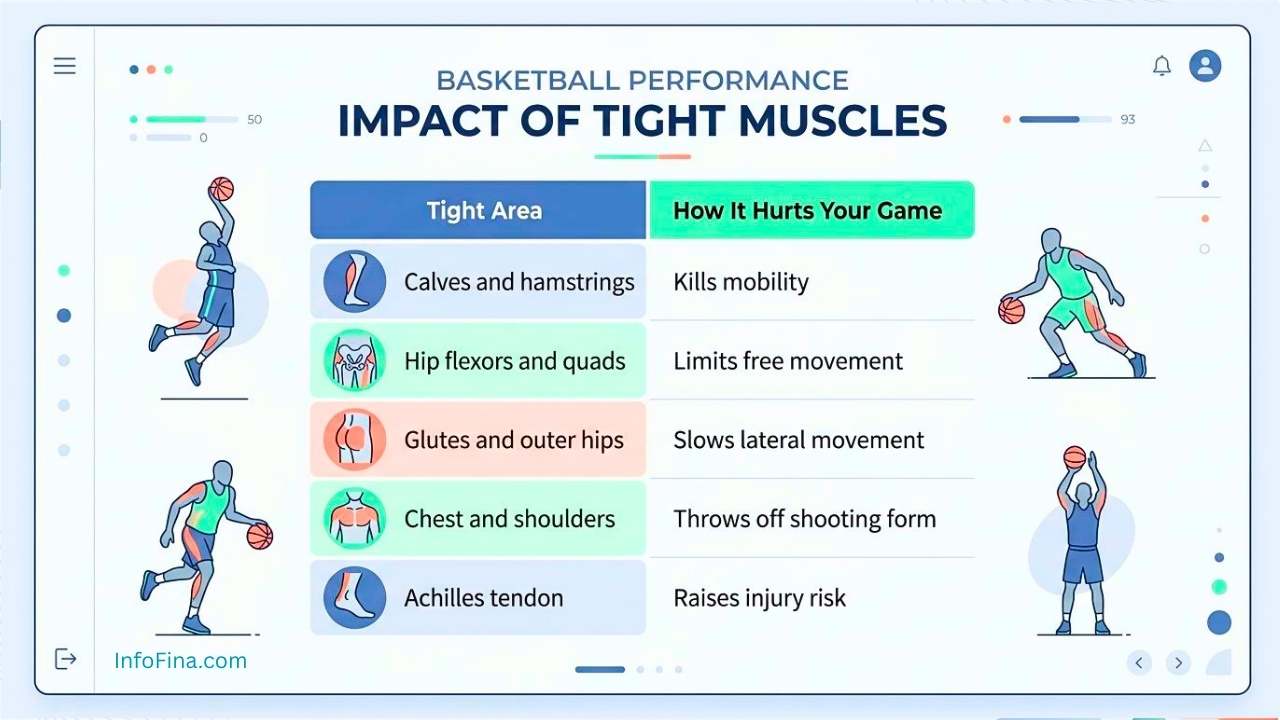
Tight muscles hurt your basketball performance in real, measurable ways. Constant running and jumping tighten your calves and hamstrings, killing your mobility and power on the court.
Explosive sprints cause your hip flexors and quadriceps to tense up, making it hard to move freely. Restricted glutes and outer hips slow your lateral movement and defensive cuts, leaving you a step behind your opponents.
Limited range of motion in your chest and shoulders throws off your shooting form and reach. Tight upper back muscles from repetitive box-outs and shooting cause real discomfort that drags down your performance on both ends of the floor.
| Tight Area | How It Hurts Your Game |
|---|---|
| Calves and hamstrings | Kills mobility and reduces explosive power |
| Hip flexors and quads | Limits free movement after explosive sprints |
| Glutes and outer hips | Slows lateral movement and defensive cuts |
| Chest and shoulders | Throws off shooting form and reduces reach |
| Achilles tendon | Raises injury risk during quick direction changes |
According to a 2025 systematic review and meta-analysis published in Sports Medicine, ankle injuries account for 25.8% of all basketball injuries and knee injuries account for another 15.5%.
Together, those two joints make up more than 41% of all reported basketball injuries. That data makes a strong case for prioritizing the flexibility work that specifically protects those areas.
Inflexibility forces your body to compensate with other muscles, creating imbalances that lead to strains. Poor mobility also burns you out faster because your muscles work harder to complete the same movements.
Yoga fixes these problems by opening up your muscles, improving your range of motion, and keeping your body healthy for the long season ahead.
What are the benefits of yoga for basketball players?
Yoga strengthens your core, boosts your balance, and builds the endurance you need to perform at a high level. These practices also sharpen your mental focus, speed up your recovery time, and help you stay injury-free throughout the season.
Yoga builds strength in your core, shoulders, and legs. It boosts your speed and jump height on the court.
High Plank Pose fires up your core for powerful moves. Bridge Pose strengthens your calves and shins to prevent injuries.
Semi-pro athletes added a 15-minute yoga routine three times weekly. After six weeks, hip reach improved by 18%. Single-leg balance increased by 22%, and soreness dropped by 30%. Most players felt less tight by week three. No new injuries happened during the whole training period.
Flexibility training gives your muscles more room to move. More range of motion means fewer strains during sudden movements. Pigeon Pose targets your hips and glutes to cut injury risk.
Yoga poses protect your ankles and knees from injury. Those are the two most common problem spots for basketball players.
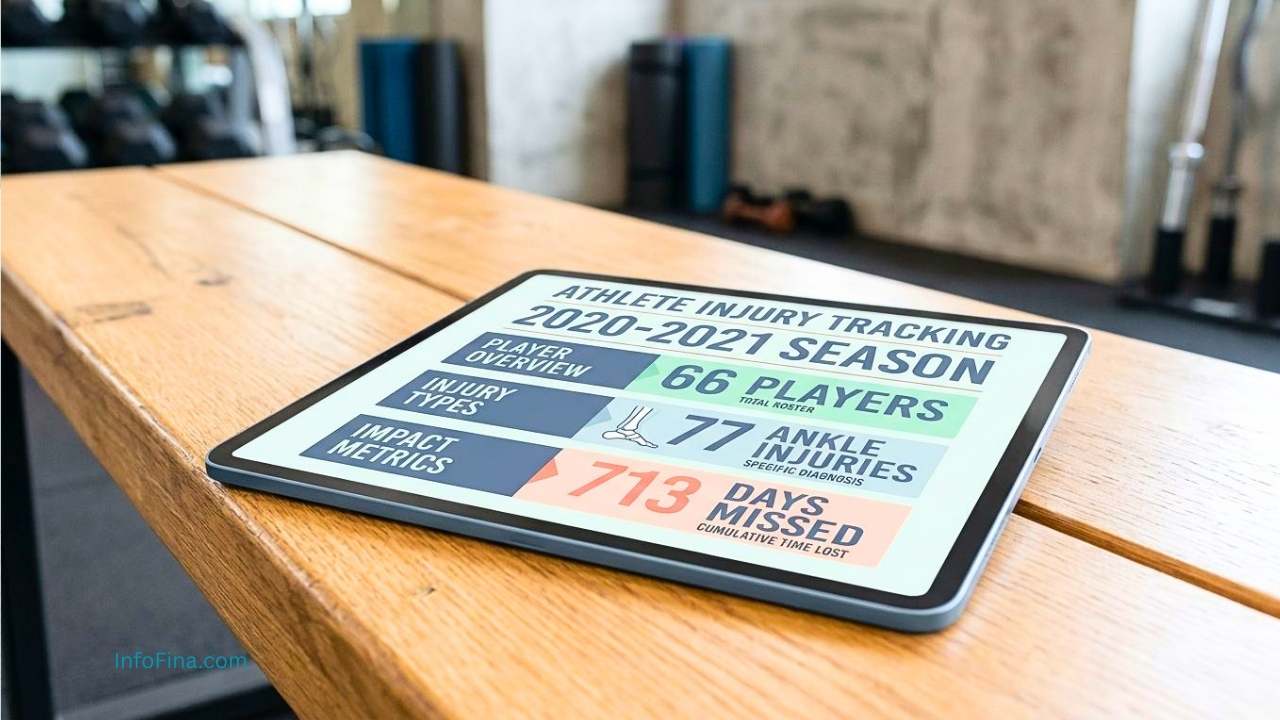
One study found 77 ankle injuries among 66 NBA players in one season. That led to 713 days missed from competition. Bridge and Pigeon Pose are built to prevent exactly that.
Yoga also strengthens your hands and wrists over time. That helps you pass and shoot more smoothly. Your joints get healthier, and you recover faster between games.
How does yoga improve strength, flexibility, and prevent injuries?
Flexibility gains from targeted poses decrease injury risk during sudden movements, keeping you healthy and on the court where you belong.
How does yoga enhance balance, coordination, and mental sharpness?
Yoga changes how your body moves and thinks on the basketball court. Enhanced core stability improves coordination during fast-paced plays, helping you stay sharp when the game heats up.
Dancer Pose improves balance by mimicking the focus needed for game-winning shots. You practice the exact mental state that clutch moments demand. Triangle Pose increases balance and relieves muscle tightness, supporting the defensive stances that keep you grounded and ready to react.
Your spatial awareness grows stronger through consistent practice. This aids quick decision-making when split-second choices determine the outcome of a possession.
- Mental clarity: Deep breathing techniques keep your mind calm during high-pressure moments.
- Focus and shot control: Warrior II Pose trains your concentration through mindful movement.
- Composure: Yoga’s emphasis on mindfulness helps you react with intention rather than panic.
- Mental toughness: Holding each pose builds the focus that separates good players from great ones.
Some of the best players in NBA history have leaned on this exact practice. NBA veteran Kevin Love has spoken publicly about performing hour-long yoga sessions two to three times a week during the offseason.
Working with instructor Kent Katich to sharpen his flexibility, focus, and conditioning. As Hall of Famer Kareem Abdul-Jabbar put it, he could not have played 20 NBA seasons without yoga. That kind of longevity does not happen by accident.
Stability improves both physically and mentally through consistent practice. This gives you the confidence to execute plays with precision and poise under pressure.
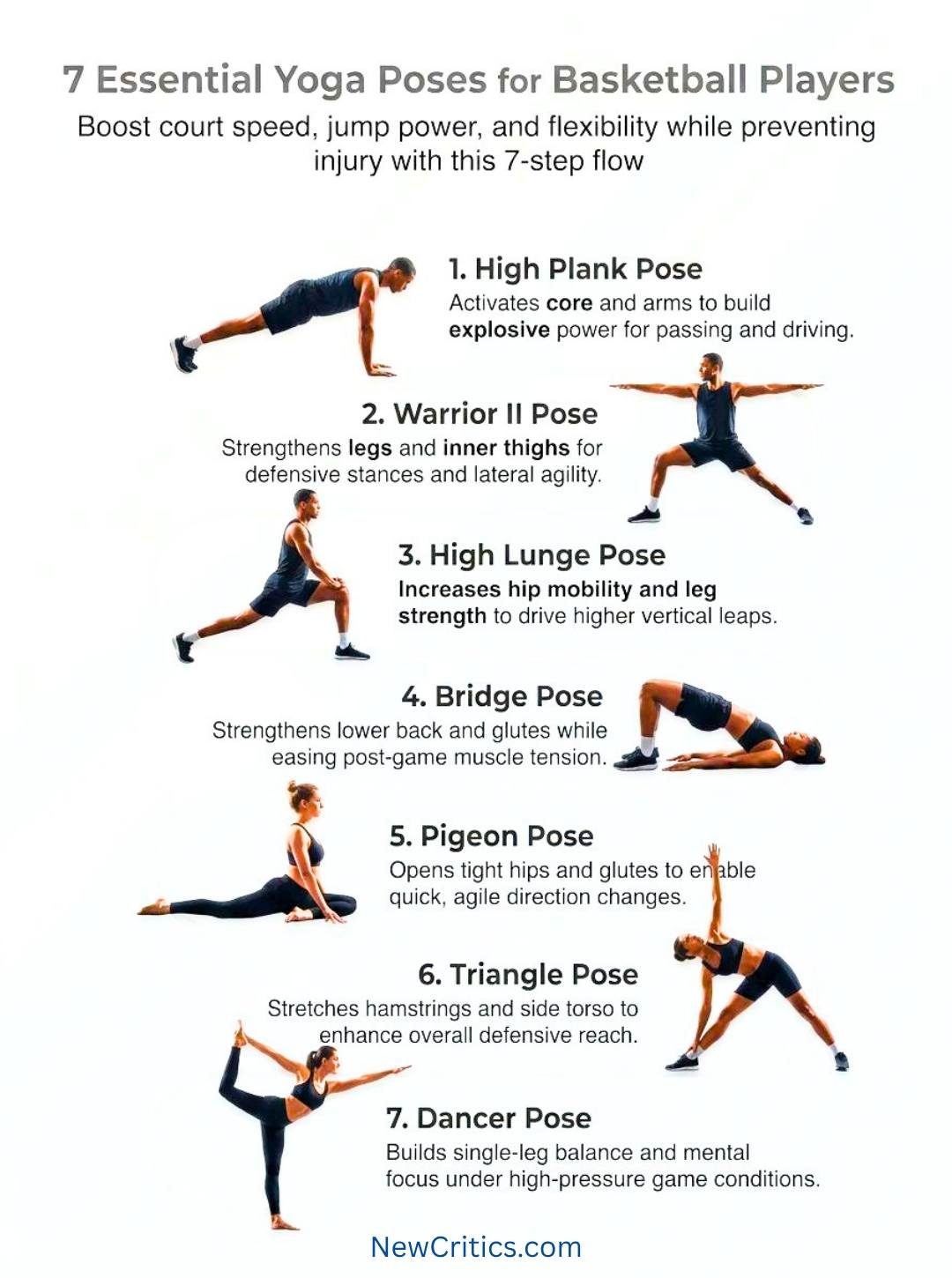
Seven essential yoga poses for basketball players
These seven essential yoga poses target the exact areas basketball players need most: your core, hip flexors, and legs. Each pose builds strength, improves mobility, and enhances your agility on the court.
What is the High Plank Pose and how does it help basketball players?
The High Plank Pose starts with you on all fours. Then you step back to form a straight line from head to heels.
Your core engages fully during this pose, similar to bracing for explosive contact on the court. You hold this position for several breaths to develop muscular endurance. Your arm muscles activate, which strengthens your ball handling and passing skills.
This pose builds the core strength and balance you need for shooting and sprinting during games. High Plank also serves as an excellent warmup that activates your muscles before intense play begins.
Core engagement in High Plank aids injury prevention during explosive plays like jumping and quick direction changes. Basketball players who make this pose a regular part of their training gain the conditioning and muscular activation needed to perform at their best.
How does the Warrior II Pose benefit basketball performance?
Warrior II, also known as Virabhadrasana II, opens your chest and stretches your glutes and inner thighs. This directly improves your flexibility on the court.
The pose simulates a defensive basketball stance with arms extended. You build strength in your legs and arms while practicing the exact position you need for guarding opponents.
| Warrior II Benefit | On-Court Impact |
|---|---|
| Opens chest and inner thighs | Improved flexibility for lateral movement |
| Simulates defensive stance | Better positioning and guarding ability |
| Builds leg and arm strength | Greater stamina for sustained play |
| Increases mental focus | Sharper shot control and coordination |
Holding Warrior II increases your mental sharpness, giving you an edge during intense games. Your balance improves with consistent practice, helping you make quick lateral movements without losing your footing.
You can use this pose both before games as a warmup and after games for recovery, making it one of the most versatile poses in this sequence.
What are the benefits of the High Lunge Pose for players?
High Lunge targets leg and hip strength while building the flexibility basketball players need for explosive movements. You place one foot forward with a bent knee, extend the other leg back, and raise your arms overhead.
This pose promotes balance and deep breathing, keeping your body ready for quick sprints and jumps. The leg strength you develop powers your vertical leap, giving you an edge on the court.
Hip mobility improves dramatically through High Lunge practice. This supports the multidirectional movement that guards and forwards rely on every game. You can use this pose for both warmup and cooldown in your training routine, making it a flexible addition to your conditioning work.
Your endurance increases as your muscles adapt to the pose’s demands. This prepares your body for the sustained performance that a full game requires.
How does the Bridge Pose support basketball training?
Bridge Pose strengthens your lower back, core, and legs. These are the key muscle groups you need for explosive movement and jumping power.
You perform this pose by lying on your back with your knees bent and feet flat on the ground, then lifting your hips toward the ceiling.
This simple movement targets the exact areas that help you leap higher, move faster, and stay stable during intense games.
Recovery matters just as much as training. Bridge Pose helps relax your back muscles and eases the tension that builds up from all that running and jumping. The pose also stretches your hip flexors, which get tight from constant movement and shooting drills.
By reducing tension in these areas, you improve flexibility in your lower legs and cut your risk of calf and shin injuries. Bridge Pose plays a serious role in preventing lower body injuries, making it a smart choice for any basketball athlete who wants to stay healthy all season.
Why is the Pigeon Pose important for flexibility?
Pigeon Pose targets your hips, groin, and glutes to build flexibility and improve athletic performance. This pose involves kneeling, stretching one leg back, and folding the other in front of your body.
Leaning forward over the bent knee deepens the hip stretch significantly. Basketball players need this deep flexibility because tight hips limit lateral movement and quick direction changes on the court.
Holding each side for 20 to 30 seconds gives you maximum benefit and builds lasting flexibility gains. Practicing Pigeon Pose maintains your hip flexibility and reduces injury risk in this critical area.
Strong, flexible hips support your overall athletic performance and agility on the court. Your body moves faster and changes direction more easily when your hips stay loose and mobile.
How does the Triangle Pose improve player mobility?
Triangle Pose stretches your hamstrings and elongates the sides of your body, directly improving your mobility on the court. You spread your feet wide, turn one foot outward, and reach down to your ankle or shin while raising your opposite arm high.
This pose opens your torso and chest, aiding your breathing and flexibility during intense games. Holding Triangle Pose for about one minute enhances your reach and helps you maintain defensive positioning.
Your hamstring function gets stronger and healthier through consistent practice, reducing strain during games and keeping your body aligned. The pose promotes balance and stability by relieving muscle tightness that limits your movement.
Your legs gain better strength and endurance as you hold the position, preparing them for quick footwork and explosive movements. Practicing this pose regularly means you move faster, jump higher, and stay injury-free throughout the season.
What makes the Dancer Pose useful for basketball athletes?
Dancer Pose stands out as one of the most complete poses for basketball athletes because it targets several on-court skills at once. You stand on one leg, reach back to grab your opposite foot, and lift the leg behind you while your other hand reaches forward.
This challenging balance move strengthens your standing foot and improves flexibility in your back. That translates directly to making crucial shots and executing sudden movements with confidence.
Your core stability gets a major boost here too. Your abs and pelvic region work hard to keep you steady throughout the pose. The chest opening you create also enhances your breathing capacity, giving you better breath control when the game gets intense.
Mental sharpness and focus come through strongly in Dancer Pose because it tests your concentration under simulated game pressure.
This final pose demands that you stay present and engaged, much like a high-pressure moment on the court. Your body and mind learn to work as one unit, sharpening your coordination for peak performance.
How to incorporate yoga into basketball training routines
You can mix yoga stretches into your basketball training by starting with a quick warmup, moving through these poses in a flowing sequence, and finishing with deep stretching to boost your recovery and agility on the court.
What is the step-by-step flow from High Plank to Dancer Pose?
This seven-step yoga flow builds your strength, flexibility, and balance for peak basketball performance. Each pose flows into the next, creating a complete conditioning routine that targets your core, stability, and agility.
- High Plank Pose: Press your palms flat on the ground and keep your body straight from head to heels. This foundational position activates your core and arm muscles for explosive movement.
- Warrior II Pose: Step one foot forward, bend your knee, and extend your arms out to the sides. This develops the lower body power essential for basketball footwork.
- High Lunge Pose: Keep your back heel lifted and sink deeper into the front knee. This stretch targets the muscles that drive your vertical leap and court speed.
- Bridge Pose: Lie on your back, bend your knees, and lift your hips toward the ceiling. This position aids recovery after intense basketball training sessions.
- Pigeon Pose: Bring one leg forward and fold your torso over it gently. Hip mobility directly improves your ability to change direction quickly on the court.
- Triangle Pose: Extend both legs wide and reach one hand down toward your shin. This pose enhances your mobility for defensive positioning and rebounding.
- Dancer Pose: Stand on one leg, pull the other foot toward your glute, and reach forward. This final pose sharpens your mental focus and coordination under game conditions.
You can adapt this routine based on your training needs. Adjust your tempo and hold times to change the effect.
For a dynamic warmup, hold each pose for 30 seconds with slow, controlled transitions. Start with 60 seconds of High Plank activation. Then move through the other six poses at a steady pace. The full warmup takes about eight minutes. Finish with 30 seconds of light mobility drills.
For post-game recovery, use static holds of 30 to 45 seconds per side. Breathe deeply from your belly throughout. The recovery sequence runs about 12 minutes total.
The same seven poses serve two different purposes. Speed them up to prepare your body for action. Slow them down to help your body heal and recover.
Conclusion
Yoga transforms your basketball game by building the core stability, mobility, and mental sharpness you need to perform at your best. These seven poses give your body and mind a complete toolkit for strength, flexibility, and resilience throughout the season.
The real benefits for basketball players
Basketball players who do yoga regularly see real changes on the court. They build core strength, better balance, and move more efficiently. Fewer injuries follow because flexibility and joint health improve.
Your body recovers faster after tough games with regular practice. Post-game soreness drops when you stay consistent. Yoga also sharpens your mind. Mindfulness techniques help you stay calm under pressure. You make smarter decisions when the game gets tight.
Your performance improves in measurable ways once you commit. Explosive power combines with active recovery to build endurance.
You can compete hard through all four quarters. Hand-eye coordination improves too, leading to better passing and shooting.
A complete yoga routine takes just 15 minutes to finish. It fits easily into any training schedule. These seven poses build both strength and flexibility at once. They change how your body feels and performs on the court.
Start adding these poses to your training today
These seven poses deliver real results you can feel in games. Trainers and players across multiple sports back this sequence. It builds strength, flexibility, and coordination that show up on the court.
The sequence works for both warmup and recovery. That keeps you sharp and makes your training more efficient all season.
Players who commit notice faster recovery and fewer injuries. Adding yoga to your basketball routine changes how you move, jump, and defend. Your muscles get more flexible with every session. Your balance improves, and your mind gets sharper too.
FAQs
1. Can yoga really help basketball players get stronger and more flexible?
Yes, yoga builds core strength and improves flexibility. It targets the muscle groups basketball players use most.
A study found athletes improved hamstring flexibility by up to 30%. That happened after just eight weeks of regular yoga practice. The study appeared in the Journal of Bodywork and Movement Therapies. Poses like Warrior I and Downward Dog led the way. They target your legs, hips, and back directly.
2. How often should basketball players do yoga?
Two to three sessions per week is the sweet spot for seeing real gains in strength and flexibility. Most players notice improved mobility and reduced muscle soreness within 4 to 6 weeks.
3. Which yoga poses work best for basketball players?
The seven essential poses are Warrior I, Warrior II, Downward Dog, Pigeon Pose, Chair Pose, Tree Pose, and Child’s Pose. NBA teams like the Golden State Warriors have integrated yoga into their training programs because these poses target the exact muscles basketball players depend on during games.
4. Does yoga help prevent injuries in basketball players?
Yes, yoga strengthens the joints and stretches tight muscles, which significantly lowers injury risk. Research shows that athletes who practice yoga regularly experience up to 30% fewer lower-body injuries compared to those who don’t. Poses like Pigeon Pose open the hips and Tree Pose builds ankle stability to handle the court’s physical demands.
